• About

Ghada's SoapBox

~ A socio-political critic's variety show

Author Archives: Ghada Chehade

The Consumerism Trap: Filling a spiritual/emotional void with material objects

30 Thursday Apr 2015

Posted by Ghada Chehade in Culture, Philosophy, Society

≈ Leave a comment

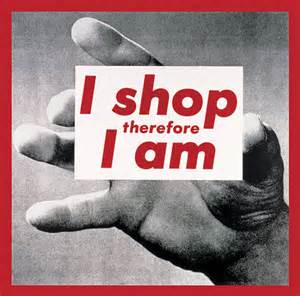
shoppingThe other night I was at a dinner party and the topic of the “American dream” came up. I referred the people at our soirée to a great rant on the topic by the late George Carlin, where he says something like the American dream is a joke and scam and that you have to be asleep to believe it (something like that, anyway). One person said to me, well how do you respond to the reality that people are more financially and materially comfortable than they have ever been and enjoy more freedoms than at any point in history? I will save my comments on how free we may or may not be in the draconian era of “anti-terrorism” laws and NSA-style government surveillance for another post. For now, I’d like to say a few things about consumerism.

In the west, and especially in North America, consumerism has become a way of life. It’s a new religion of sorts and a raison d’ etre all its own. While buying things is not inherently bad (though there is the question of where things come from, how they’re made, what natural resources are depleted, who makes them, under what working conditions, etc), my response to the guest was that while some westerners may be more materially comfortable than at any point in history, we seem to be highly unhappy. One of my earlier posts discusses the increasing use of “mood disorder” drugs in the west. It seems that the more “comfortable” we become as a culture, the more depression, anxiety and general dis-ease we experience. There may or may not be a direct causal link between consumerism and our social mal-content. Having our basic needs met is very important; but hyper-consumption does not seem to make us happier. Given the argument that we’re more materially comfortable than we’ve ever been (of course, there are millions of people for whom this is not true, but I digress), one might expect modern people to be happier.

But consumerism and material objects alone cannot bring lasting happiness, not least because consumerism and advertising are a type of trap or trick that convince us to fill spiritual and emotional voids with material objects. I do not use the word spiritual in a religious sense but rather to describe a sense of connection with other beings and our social and natural worlds as well as the pursuit of deeper truths, etc. Human beings need spiritual and emotional connections and interactions with other people and living things, with nature and our larger world and universe. Connection and interaction—something that is both simple and sublime—is part of our humanity. But in the modern world, people (with all our depths, nuances and complexities) are becoming mere customers and shoppers. While material comforts are necessary to a point, our needs are not just material. Hyper-consumerism and the endless accumulation of stuff for its own sake disorient and disconnect us from our own humanity, and each other.

Consumerism is an endless trap

One “proof” that consumerism tricks us into trying to fill emotional voids and needs with material objects is in the ways material things are advertised. It is well documented that, in trying to sell us things, advertisers appeal to our emotions and desires. And if you don’t think that the advertising companies have dug deep into the human psyche, just look at the billions of dollars they spend on psychological research in order to tap into (and shape) our emotions, desires, etc., and often create what is known as false needs. Advertising uses and exploits our (well-studied) humanity–our fears, desires, emotions, insecurities, need for social validations, vulnerabilities, etc–against us to transform us into customers, clients and audiences. They exploit our humanity in order to get us to consume, buy and watch things that often dumb us down and divert our attention away from other, much more important issues than the mere accumulation of stuff.

Consumerism, corporate culture and advertising are ultimately very clever methods for continuously funneling money from people, because they attempt to fill an emotional or non-material void (i.e., need for love, acceptance, human connection, belonging, relationships, etc) with material things. And since the void is being filled by something that does not truly fit it and cannot satisfy it long-term, it is only a matter of time till we buy something new and try to fill it again, and then again and again and again. Psychologists and happiness experts have shown that new material possessions and purchases only sustain happiness for three months. This may explain why people are quick to go out and by the new version of the latest gadgets and cell phones, though there is little real change or improvement to them, after just a few months. Overall, consumerism it is a bottomless pit and never-ending cycle of trying to fill a non-material void with material things. We end up in an endless loop of wanting, spending/buying/consuming, temporary “happiness”, and then wanting and spending again. The result is a hyper-consuming, distracted population that spends lots of money and asks very few questions. It’s great for business (and political elites) but not so great for our hitherto unaddressed emotional and spiritual needs.

Share this:

  • Tweet
Like Loading...

Hypocrisy Alert: DEA agents party it up at drug cartel-funded “sex parties”!

29 Sunday Mar 2015

Posted by Ghada Chehade in Current Events, Politics

≈ Leave a comment

Tags

Current Events

dea-party

I recently read a news article entitled “DEA agents had ‘sex parties’ funded by drug cartels…” As the article states, a report by the US Justice Department has revealed that, “US Drug Enforcement Administration [DEA] agents working abroad took part in ‘sex parties’ with prostitutes that were funded by the drug cartels they were meant to be battling.” In other words, DEA agents—the people who are suppose to be fighting the US’ “war on drugs”— were partying with hookers paid for by the same international drug lords they are suppose to be fighting and bringing to “justice.” Let’s not forget that these are federal agents, with huge amounts of power to arrest others for illegal, drug related behaviours. I guess it would be counter-intuitive for them to start arresting each other!

I for one am not the least bit surprised. If there’s one thing you can count on in this world, and especially in the US, it is for the people in power—be it political, legal, religious or financial power—to often be complete hypocrites. I wouldn’t be the least bit surprised if these so-called “drug enforcement” agents were also using drugs at these hooker-filled sex parties. After all, what’s a drug cartel sponsored sex party without some “party favours”!? And considering that these parties were funded by drug cartels, one can assume that the agents wouldn’t have much trouble “scoring some drugs.” I can picture it now; American DEA agents doing lines of cocaine off of foreign prostitutes’ toned midriffs. But I digress, there are no reports (yet) of DEA agents actually doing drugs, so lets stick to the facts at hand, shall we: sex parties with hookers paid for by drug lords!

Now, I am not “personally offended” by this story. Personally, I could give two flying flips if these guys are partying with hookers and drug cartels. Now their wives might not be too impressed but that’s not my issue. No, my outrage is more of an intellectual variety; it is rooted in justice and logic, because these party boys also just happen to be federal DEA agents. Now in a “democracy,” the myth goes, certain forces and institutions—such as, umm, the Law—are given power over the rest of us lowly mortals because they are supposedly righteous and are upholding justice and what is “right.” Of course, they also happen to be the same institutions that define what is “right.”

The biggest issue is the hypocrisy of it all; the utter and brazen double speak and double standard by a system of power that purports to know what is “right” and lawful, and which has the power—and audacity—to police and judge and incarcerate the rest of us—for doing the same “bad” things (or in this case, probably far less bad things than) they do. It’s the same hypocrisy at play when politicians preach family values then cheat on their spouse or when homophobic preachers turn out to be closet homosexuals, etc. But this DEA story is far worse than just personal hypocrisy because it is lawmen breaking the law, drug enforcement officers colluding and partying with mega drug dealers.

Why claim to be fundamentally opposed to something—and condemn and police other people over it—when you are doing it yourself!? Why wage a bogus “war on drugs”—that has incarcerated millions of mostly poor, black and brown males—while participating in the drug trade (1980s contras scandal, anyone)? Why outlaw prostitution and then party with prostitutes on foreign soil? Basically, why break the same laws and rules you mercilessly enforce against the rest of us?

Could it be that the laws are only meant for the lowly masses; that the laws exist to control and domesticate the people—the underclass—while the elites do as they like?! Could it be that, as Kahlil Gibran once wrote, “the nets of the law are devised to catch small criminals only”? When you learn of federal drug enforcement agents who, according to the article, “also were provided money, gifts and weapons from cartel members,” it really makes you wonder! What’s next, are we going to learn that the same government regimes that started a global “war on terrorism” also sometimes support or indirectly fund Islamic terrorists?! Oh, wait. This. Just. In:

http://www.bbc.com/news/world-middle-east-22906965

https://www.youtube.com/watch?v=oidaJHwZZgs

http://countercurrentnews.com/2014/09/u-s-general-openly-admits-we-helped-build-isis/

https://www.youtube.com/watch?v=tifCnaKrlaE

http://www.cbsnews.com/news/white-house-isis-a-terrorist-group-but-taliban-an-armed-insurgency/ (an extra treat)

Share this:

  • Tweet
Like Loading...

Will German pilot be labeled a terrorist or is that label reserved for “certain people”?

27 Friday Mar 2015

Posted by Ghada Chehade in Current Events, Society

≈ Leave a comment

Tags

Current Events

german pilotIt is now being revealed that, tragically, the recent Germanwings crash was the result of intentional actions by co-pilot Andreas Lubitz (pictured above). It is being reported that Lubitz waited until the other flight pilot left the cockpit, locked the door and then proceeded to purposely fly the plane into the French Alps, killing himself and all 149 people on board. The tragic situation is still under investigation and further details—such as Lubitz’s motive or mental state at the time of the intentional crash that killed everyone on board—have not yet emerged. It is possible that Lubitz suffered some kind of a mental breakdown or that he was suicidal and maliciously and selfishly took the lives of 149 other people with him. Or maybe he had some political or social grievances.  At this point, we simply do not know what caused him to do such a horrible and murderous thing. And since Lubitz perished in the crash, we may never know.

The point I’d like to raise is this: will the media and officials (and people in general) label Lubitz a terrorist, now or in days to come? So far, I have not seen media reports using this language to describe the co-pilot and his sick actions. The reality is that we do not know enough to know what his motives were, if they were politically motivated or if he was having some kind of personal or mental episode. We still do not know and it is too early to say. Though I would argue that if someone selflessly, sadistically and senselessly takes the lives of 149 other people then they are a terrorist, whether they have political or religious motive or not. If Lubitz was suicidal then why not simply take his own life? The very act of intentionally murdering 149 innocent people along with him is an act that will forever terrorize the family of those innocents, frighten the public, and, is now forcing airlines around the globe to change their chock pit policies.

At the end of the day, this man killed innocent people by flying a plane into the side of a mountain. And when people crash planes into inanimate objects we tend to call them terrorists (and rightly so!). Still, no one is calling Lubitz a terrorist. But we can bet that had this sick and murderous co-pilot been a Muslim (or a brown non-Muslim even), and had he done the exact same thing as Lubitz, we would have automatically labeled him a “terrorist.” Before knowing any of the details, before knowing the circumstances or mental state of the pilot, his very identity as a Muslim (or Arab or numerous other ethnicities that fit the “evil other” image) would be enough to label him a terrorist, regardless of the details.

In the case of the Germanwings crash all we know so far is that the pilot intentionally crashed the plane and he happens to be a German, and no one is calling it terrorism. But if he were a Muslim man, it is highly unlikely I could write the same words. For instance, that: All we know so far is that the pilot intentionally crashed the plane and he happens to be an Arab or Muslim, and no one is calling it terrorism. That does not read very “realistically” because the reality is, in the current climate in which we live, if someone does something bad or horrible and they happen to be Muslim, then their actions will automatically be labeled as terrorism, even before we know any of the details. As Bill Maher so inanely once put it: “not all Muslims are terrorists but all terrorists are Muslims.” Using this (ill) logic, when non-Muslim people commit acts that could potentially (or actually) be considered terrorism, we cannot or will not label it as such, because that label is reserved only for Muslim people (and other unlucky brown folks that could be mistaken for or confused with Muslims).

I’ve scanned the media coverage and no one is labeling Lubitz a terrorist. But if the co-pilot of Germanwings flight 4U9525 were Muslim (or brown) it is very likely we would label him first, and ask questions later. But alas Lubitz is a white European and, arguably, has what comedian Paul Mooney once called “the complexion for the protection.”

UPDATE: On March 28 media reported that Lubitz might have been suffering from depression, describing him as a “troubled pilot.” Still no mention of terrorism. This is typical of media coverage of mass murders by white men; they’re often described as troubled or lone wolfs, etc.

Share this:

  • Tweet
Like Loading...

Why isn’t anyone talking about Angelina Jolie’s privilege?!

25 Wednesday Mar 2015

Posted by Ghada Chehade in Current Events, Society

≈ Leave a comment

Tags

Current Events

Angelina-Hollywood actress and director Angelina Jolie has been in the media a lot recently over her decision to have a preventative/pre-emptive double mastectomy and, more recently, to have her ovaries and fallopian tubes removed. She decided to have the surgeries after she discovered that she carried a gene that gave her an 87 percent risk of developing breast cancer and a 50 per cent risk of developing ovarian cancer.

While the media has been busy hailing her bravery and courage, such reportage eclipses the reality of her immense privilege. Jolie is not the average American woman. She is a multi-millionaire that can afford to have these surgeries in the first place and also to pay for the expensive reconstructive breast surgery and hormone replacement therapy required afterwards; not to mention paying for the expensive genetic screening tests. Millions of American women do not have adequate health insurance or income to make these procedures an option. And even if insurance providers did cover the double mastectomy, it is unlikely they would cover the cost of reconstructive surgery, which would be considered purely cosmetic in a situation where cancer does not actually (yet) exist. Angelina Jolie’s class—yes, I used the forbidden word class—and immense wealth essentially makes it easier for her to be “brave” enough to have her breasts removed preemptively, knowing that she can afford world-class reconstructive surgery afterwards. Also, some medical professionals feel that promoting invasive and drastic pre-emptive surgeries can promote fear and extreme measures in women who carry the cancer gene (and even some that don’t) but may never actually develop the disease.

Rather than simply highlight the plights and courage of multi-millionaires, stories such as Jolie’s should spark dialogue—including by Jolie herself—about the dismal state of public health care—or lack there of—in a country that regards itself as “number one” in the industrialized world. While the US is the world’s dominant power, it remains one of the only “first world” nations where many or most people cannot even afford cancer treatment let alone hope to have access to radical preventative tests and procedures. As a Canadian I am not fully aware of the US health care system (in Canada, cancer treatment is universally paid for through the public health care system, which the people pay for through their taxes) but I do know of some American friends suffering from breast cancer who are having a hard time getting access to chemotherapy and radiation treatments for lack of insurance.

That is the reality of many (or perhaps even most) people in the US. It is a reality that is far removed from that of Jolie and the uber-rich. Rather than focus on wealthy celebrities that have very very little in common with the general population, we should talk about the increasing austerity and lack of spending that plagues everything from health to education and employment. Until Angelina Jolie has the “courage” to speak publicly about that, and about the right of common people to have access to health care and cancer treatment, we should not be rushing to praise the mega-rich for exercising their privilege.

While I do not doubt that she made these decisions for the sake of her family and children, her recent statement that [with these surgeries], “I know my children will never have to say, ‘Mom died of ovarian cancer,” is an example of her unique privilege. For while she may be fortunate enough to guarantee that her young children will not lose their mommy to ovarian or breast cancer, there are thousands of children (of less privileged women) who will! While loads of cancer deaths are unpreventable, some women (and men) could have been saved with early screening and diagnostics, things many people are not financially privileged enough to have access to. It would be nice if these important social issues were discussed alongside celebrity worship/heroism.

Share this:

  • Tweet
Like Loading...

A Female Analysis of the Hollywood Film Gone Girl

13 Friday Feb 2015

Posted by Ghada Chehade in Culture

≈ Leave a comment

gone-girl-white-titleNote: If you haven’t watched this film and wish to then you should stop reading now, as I will discuss the plot and ending of the film!

A couple of months ago I watched the movie Gone Girl and had an intense reaction to it. I wanted to write about it back then but other things came up and I also don’t typically write about pop culture.  But since watching the film I’ve heard or read analyses of it that have “forced” me to say my piece. I knew nothing about this movie—other than the fact that I was reluctant to watch it—before watching it. I watched it with a heterosexual male friend and when it was over we both had the same reaction: “wow, whoever made this film must not like women!” For surely only a hater of women could depict them in such a light! When we searched the film and discovered that it was based on a book written by a woman–Gillian Flynn–I was a bit confused. I had naively assumed the book was written by a misogynistic man.

And when I read the online reactions and reviews of the film I was doubly confused. While some felt the film was misogynistic or anti-women, many hailed it as a feminist celebration of “strong empowered women.” Seriously?! For those who haven’t watched the film, it basically revolves around the popular and tired clichés/stereotypes that men are cheating pigs and women are crazy psychos, taken to brutal and bloody extremes. Given the sociopathic and brutally violent revenge the female character embarks on for her husband’s cheating—the worst of it aimed at another, innocent man who was merely trying to help her—I assumed that women would find the film highly offensive (for its portrayal of women as scheming psycho killers.) When I saw reviews hailing the film as a feminist piece that depicts women as strong and empowerment, I was surprised.

Is this what western feminism has become!? It goes without saying that the male character—the emasculated and failed husband played by actor Ben Affleck—was totally wrong to cheat on his wife (as a woman would be for cheating on her husband) but the female character’s reaction was extreme, to say the least. While she starts out with a clever (yet disproportionate) plot for revenge, by the time she slits poor Desi Collings’ throat—her rich and overly obliging college sweetheart whom she exploits and then kills in cold-blood—she has gone from clever schemer to cold blooded killer. And that is what made me think it was an anti-woman film. For me (and my male friend) the message was that women can be sneaky. They pretend to be one thing (in this case, the cool and fun wife that is not fazed, does not “nag” and is sexually adventurous) while underneath they may be mentally unstable and will ruin your life and go on a killing spree if you hurt or betray them. To me, this is a highly negative portrayal of women. So I was surprised and confused to see this film hailed as feminist.

While I get that some may find her plan for revenge clever or “empowered,” it is nonetheless a huge over-reaction. Yes, cheating is bad and wrong, but framing her husband for her murder is a bit excessive don’t ya think?! And the fact that she murders a man in cold blood (and practically bathes in his blood) and then blackmails her husband into getting back together with her and having a child together (for fear that he will suffer the same fate) makes this female character both clinically insane and extremely pathetic. A man does not want to be with her, so she forces him to stay with her by threatening his life? And let us not forget the second ex-boyfriend whom she falsely accused of rape when he ended their relationship. Are these the actions of “an empowered woman”? This is the epitome of non-empowered, weak and criminally insane. Such a depiction of women is cringe-worthy. And the fact that this type of female character could be seen as a positive or empowered depiction of women may speak to how confused we have become as a society.

Or maybe it’s just me…

Share this:

  • Tweet
Like Loading...

Mad World: Anti-Depressants Won’t Save Us, But Social Transformation Can!

08 Thursday Jan 2015

Posted by Ghada Chehade in Philosophy, Society

≈ Leave a comment

 pillsThis Article first appeared in the Activist Post.

One need only watch the endless procession of pharmaceutical commercials on TV or meander through the Internet to get the sense that North Americans and western cultures generally, are heavily reliant on so-called mood disorder medications. From depression to social anxiety disorder, Prozac to Paxil, it seems that the “modern world” is inhabited by humans gone marginally mad. Many mainstream articles and news sources uncritically report that stress, anxiety and depression are symptoms of modern society, while never raising the need to address the social ills that create human illness. While I agree with the claim that mood disorders may be symptomatic of modern society, I wonder if we have not wrongly focused on ‘pathologizing’ the individual rather than the society. If depression, anxiety and stress are indeed emblematic of the rat race known as the modern world/modern society, is it not more appropriate and productive to pathologize and treat the society rather than merely the individuals who are reacting to it? This calls for a total social transformation that will move us away from meaningless hyper-materialism and corporate mediated living, toward systemic harmony and clarity.

To grasp the veracity of this suggestion, we must understand the need for harmony and balance with our environment–both natural and social. Proponents of hyper industrialization and Progress for progress’ sake, as well as die-hard capitalists often site Darwinian notions of “survival of the fittest” as a justification for the never-ending depletion of resources and destruction of our natural environment and the incessant dismantling of community interconnectedness. Humans, the argument goes, are the strongest of the species, and we have survived and must continue to survive by “conquering” (aka: destroying) and exploiting the natural environment. In other words, to survive, we must be lords of the earth rather than in harmony with it.  However, organisms and species most likely to evolve and endure, are those most able to adapt to their environment and grow to thrive within it (without destroying it). Now, I would like to put forth an interpretation of adaptation that seems quite obvious and yet has not been the mainstream reasoning.

Destruction is the Antithesis Of Adaptation

Because our very existence depends on life sustaining forces (oxygen from plants and light from the sun for example) and the forces of protection (the atmosphere and its ozone for example) provided by the natural environment, destroying these forces can only be said to be antithetical to adaptation. Neo-cons and corporate pundits read adaptation as destruction and plundering, but what it really means to adapt to the environment, and thus thrive, is to live in harmony with it. Thus our relationship to the world and nature must be synergistic and not hierarchical. This is not a moral choice but a reality insofar as we are part of this meta-organism we call life, earth, the universe etc. What’s more, our interconnectedness with the natural environment is not a wacky, new age, feel good delusion but pure scientific fact. Undeniably, our physical existence is made possible through a feedback loop, in which we trade carbon dioxide for oxygen with plants and trees. When humans exhale we sustain the life of plants, and in turn human life is sustained when plants exhale.   This literally means that we breathe in concert with and through the natural environment. Since we literally need the environment to live, adaptation necessarily implies a synergistic balance with nature not its unbridled destruction. This is not to say that we cannot live off of it, for surely we must, but not to the extent that we kill it. Ultimately, any species that destroys the very environment it needs to survive can never be said to be adapting to it, and cannot be seen as the “fittest.” Yet true to their disingenuous nature, the global corporate and financial elite would have us believe that they are destroying the world in order to advance it. However, after centuries of so-called Progress it is painfully apparent that unbridled industrial, economic and corporate “growth” is adversarial to healthy human development.

In other words, the modern industrialized Western world is fundamentally at odds with real human (adaptive) needs and happiness. What is making us ‘crazy’ is that at our core, we are all deeply rational [1] beings with an innate sense of logic (and therefore justice), who reside in an irrational world. This relationship induces a mental “fissioning” and profound confusion within, thus facilitating a disconnect with and within the social order; resulting in social pathologies symptomatic of social anxiety etc. This form of mass cognitive dissonance makes the society crazy, while it ironically labels (and medicates) individuals as maladjusted to an insane world.

But where is the proof? Let us return to those incessant, and freakishly surreal, television advertisements for anti-depressants. If humans in the “Western” world are truly well adapted to the environment, why is there so much dis-ease? Were the trajectory of the modern age indeed the correct one for healthy physical, social and mental development (and for existence generally) there would not be such a preponderance of physical and mental illness. Despite (or perhaps because of) all our money, technology, and hyper-materialism we are miserable.   We are a species at odds with itself in a world gone mad, and we can all feel it. And duped into believing—through social pressures that create social pathologies—that this is the natural order of things, and that we cannot as socially disenfranchised ‘citizens’ change our external environment, we turn to medications to cope. We have become increasingly dependent on stimulants to make it through the day and sedatives to make it through our nights. But what we need to realize is that we are not sick, society is (and in turn it has diagnosed individuals as sick). Thus to “feel better” we need to fix society and all its ills. This has to start and end with all of us! The state and its corporate allies/masters will never do it for us because there are billions of dollars to be made in medicating citizens and keeping them docile and pliable; and also because a “bewildered herd” is easy to lord over. Social transformation, changing this mad world and creating something better is the only answer.

Basically friends, we are living out of balance, and it is time to change the systemic channel so to speak. Don’t believe me? The proof is in the prescriptions!


Note

[1] I use rational here not exclusively in the way in which it is employed by (Aristotelian) positivists as having to do with reasoning and man, but in its purely functional mode; as a biological by-product of the laws of nature/natural philosophy, where all living things conform to (and require) phenomenological consistently in the natural world. We are all part of the natural world, which is fundamentally consistent and currently at odds with our inconsistent man-made world.

Share this:

  • Tweet
Like Loading...

Get Real! A Woman’s Response to Michael Laxer’s accusation of “all men” for Jian Ghomeshi’s alleged actions

18 Tuesday Nov 2014

Posted by Ghada Chehade in Current Events

≈ 9 Comments

Tags

Current Events

Kiam Last week I read an article by Michael Laxer (former candidate and election organizer for the NDP, and a two time Socialist candidate for Toronto City Council) that is surprising on numerous levels. In the blog post, Laxer argues that “all men…collectively, and most commonly as individuals, are responsible for creating the conditions that not only facilitate Ghomeshi’s alleged abuse, but that ensure he will exist.” Not only is this a generalization, but Laxer fails to give any broader analysis of the corporate and power conditions that create a supposed culture of abuse against women. In a capitalist society, not “all men” possess equal power to create these conditions or any conditions at all. While the existing social conditions (of misogyny, objectification of women, etc) may have been created by rich and powerful male elites, most men are not in this privileged male group! The majority of men (and women) do not create the dominant culture, they simply react to, consume, or absorb it. While he touches on pornography and prostitution as culprits, he does so in such a way as to mainly blame the male consumers of debased and violent pornography rather than to also critically interrogate the producers and owners of the industry. It is these men, this small group of wealthy elites that produce and disseminate such images and attitudes of women as objects to be man- handled (often violently or degradingly).

I agree that much modern day mainstream pornography is degrading and offensive to women. But why is he blaming the consumers of pornography rather than the producers? While the pornography industry is owned and run by male elites, the key word is elites, meaning a handful of wealthy, profit-driven men. Three billion men do not produce pornography. Laxer is blaming the consumer while leaving the producers wholly unscathed. And pornography is not the only industry that exploits, debases, objectifies and sells female sexuality to men for profit. Almost every male-focused industry on the planet—from beer, to cars, sports, and even after-shave—use sex and sexualized images of women to market to men. If the adage that sex “sells” is true then clearly we are talking about, or should be talking about, consumerism, capitalism and corporate mediated culture. As a socialist, Laxer makes no attempt at capitalist or corporate critique, what so ever, which is surprising and disappointing. Instead he puts all the blame on the consumers of sexualized (or debased) female images and treatment. Of course the consumers of particular forms of pornography are complicit to a degree, but pornography producers are even guiltier than the consumers are. Pornography does not simply mirror consumer tastes and trends, it also creates them. And many male consumers of pornography do not like the trends and tastes that are currently being marketed to them, opting instead for “amateur pornography” because it is less brutal, less sensational and more realistic; meaning similar to the intercourse they engage in.

all men

We need to go to the source of the problem. And it is not all men, it is a particular class of men; the men with the power to produce/create and perpetuate a culture of violence or sexual exploitation of women in the first place. To wholly accuse all men of this crime is both extreme and offensive to me as a woman and a humanist and I can imagine to the majority of men who may have read his article. While a male culture of female exploitation and objectification does exist, not all men are equally guilty of creating, or even have the power to create, this culture. At the same time, some female elites also contribute to the reproduction and perpetuation of this culture. We must talk about power and class, something so-called progressives refuse to do in the west. In a capitalist or corporate hegemonic society, the majority of men and women lack any real power. All of the men Laxer cites in his article (Jian Ghomeshi, Bill Cosby, R Kelly, Woody Allen etc, ) are wealthy or famous men of power. So class must come into his discussion. These men are from an elite group  or class (i.e., the rich, famous and/or politically powerful) in society.

While it is sadly very true that economically and politically powerless men—i.e., working class, middle class or poor men—also beat, sexually assault and kill women in the west (and around the world), and exert their physical power or supremacy, it is also true that many men (maybe the majority of men) do not! So to write an article accusing “all men” of being rapists or indirectly complicit in sexual abuse simply for being men is ridiculous and insulting not only to men but also to women. These are our fathers, brothers, husbands, partners and sons! While sexual abuse and violence against women exists and is pervasive in many places, not every man is a rapist or violent and not every woman has suffered at the hands of men. I have often felt safe and protected in the presence of men or by their actions. There are noble protective men in this world who use their “masculinity” and physical strength to make others feel safe, not threatened! Surely, we cannot and must not lump these men in with rapists and abusers of women.

Share this:

  • Tweet
Like Loading...

The “New Left” and the Limits of Identity Politics

18 Tuesday Nov 2014

Posted by Ghada Chehade in Politics, Society

≈ 2 Comments

Tags

Politics

identity-politics

Once upon a time, I considered myself a lefty. I was critical of the system, global economic power, and Western imperialism and imperial wars. I was also conscious and critical of socioeconomic and class issues. Overall, I was wary and critical of militarized global capitalism as an international system of power and exploitation that historically gives rise to a host of other issues and problems. To me, being “left-wing” implied some form of critique of the system and a desire to, on some level, transform or replace it [1].

Today, I have a far less clear notion of what it means to be left wing and I no longer employ the label. This is largely due to the left’s “transition” to identity politics, liberalism and hard-line political correctness.

The contemporary left or “new left” (or “fake left”, as many have come to see it) seems much more concerned, if not obsessed, with personal identity than economic and political, analysis and opposition. Everywhere I look, issues of gender, sexuality and (to a lesser extent) race seem to dominate the Left. Since the late 1960s and 1970s, the radical left, which had criticism of the system and class-consciousness as underlying characteristics, became increasingly concerned with an identity politics that is not amply couched in critical ideology or larger critical analyses of the global system of power. While identity issues may matter, being gay, a woman, transgender, or a racial minority does not, in and of itself, make one subversive or anti-systemic nor does it necessarily threaten the global system of power [2]. If anything, by diverting attention away from class and economic issues and struggles, identity politics may unwittingly reinforce the power of the system.

While sexually and racially marginalized people may deal with increased social bias, discrimination and or obstacles because of their “identity,” class and politico-economic power are the elephants in the room that the new left must not be afraid to address. Wealthy racial minorities or wealthy women, for instance, likely experience less bias and less social barriers than poor ones.  While they may differ from wealthy white males, they share something very important in common–their wealth and the social access and mobility it allows.  What this means is that, despite racial, gender and other differences, individuals have much in common–i.e., similar struggles or similar privileges based on wealth or lack there of–with people of a similar economic position. While identity politics divides people (into little camps and special interest groups), economic status and or economic plight (i.e., class) is the great “unifier” insofar as there is currently a global economic order or system that is collectively screwing the majority of the world’s people.

Seeking inclusion or wider representation within this system it is not necessarily an act of subversion or resistance. Belonging to a marginalized identity can be very subversive against social and religious norms but it is not, in and of itself, subversive against the politico-economic power structure. While many people are undeniably discriminated against based on race, gender and sexuality, an identity politics that is devoid of class-consciousness, class analysis and class struggle does not threaten or undermine the global system of power. As I previously stated, by shifting attention away from class and economic issues, identity politics may actually reinforce the power of the system.

In other words, identity politics does not directly threaten the system. One way to know what threatens the establishment is to examine what the establishment targets as an enemy. For instance, for my doctoral research, I examined what the Canadian state targets as enemy number one–that being terrorism–under its anti-terrorism laws. Strangely, why this legislation is suppose to be aimed at combating “terrorism,” what I found is that the laws seems to be targeting a very particular type of dissent. My in-depth, award-winning analysis of Canadian anti-terrorism shows that/how the laws are written in such a manner as to conflate anti-globalization or anti-capitalist/corporate dissent and protests with the very serious crime of terrorism. A major implication of these findings is the the Canadian state, much like other western states, is so threatened by dissent and resistance to global economic power that it legally considered it a form of terrorism.

By looking at the type of dissent or opposition the State targets and criminalizes we begin to get a picture of what type of is dissent is threatening to–and can therefore have an impact on–power. Nowhere in the hundreds of pages of legislation and official security documents that I examined did I see the words “women’s movement” or “gay/queer movement” or “black movement” movement or activism  explicitly mentioned as a threat to national security and conflated with  terrorism or terrorist violence.  This implies that identity-based types of dissent and political movements—i.e., identity politics—do not, on their own, threaten or undermine the western capitalist state and the global system of politico-economic power, of it which it is currently a component.

In other words, my research reveals what really threatens the power structure, and it ain’t identity politics! Thus, the research findings suggests that class and economic struggles or movements  (such as the anti-globalization or anti-capitalist movement), not identity-based ones, are the core issues at stake for confronting power and oppression and the ones that we should focus on more.  If the objective of the Left is (suppose to be) to challenge the oppressive power structure, then it may be useful to look at what types of dissent and resistance that power structure is actually afraid of—as my research does—and then embark on or focus on these forms of dissent and oppositional politics.

Notes

[1] At the same time, I was conscious and guilty of the contradictions of living, participating and working in a system I am critical of–I work to pay the bills, buy things and participate in consumerism, etc.

[3] I define subversion as criticism of or opposition to the politico-economic power structure and militarized global politico-economic power or simply, Empire.

Share this:

  • Tweet
Like Loading...
Newer posts →

Categories

  • Culture
  • Current Events
  • Electric Universe
  • Geopolitics
  • Philosophy
  • Poetry
  • Political Economy
  • Politics
  • Science
  • Society
  • Uncategorized

Archives

  • March 2023
  • February 2022
  • October 2021
  • July 2021
  • May 2020
  • November 2019
  • April 2019
  • January 2019
  • December 2018
  • November 2018
  • October 2018
  • September 2018
  • August 2018
  • May 2018
  • April 2018
  • February 2018
  • January 2018
  • November 2017
  • October 2017
  • September 2017
  • July 2017
  • June 2017
  • May 2017
  • April 2017
  • March 2017
  • February 2017
  • January 2017
  • December 2016
  • November 2016
  • October 2016
  • September 2016
  • August 2016
  • July 2016
  • June 2016
  • May 2016
  • April 2016
  • March 2016
  • February 2016
  • January 2016
  • December 2015
  • November 2015
  • October 2015
  • September 2015
  • August 2015
  • July 2015
  • June 2015
  • May 2015
  • April 2015
  • March 2015
  • February 2015
  • January 2015
  • November 2014

©2014-2020

Blog at WordPress.com.

Privacy & Cookies: This site uses cookies. By continuing to use this website, you agree to their use.
To find out more, including how to control cookies, see here: Cookie Policy
  • Subscribe Subscribed
    • Ghada's SoapBox
    • Join 48 other subscribers
    • Already have a WordPress.com account? Log in now.
    • Ghada's SoapBox
    • Subscribe Subscribed
    • Sign up
    • Log in
    • Report this content
    • View site in Reader
    • Manage subscriptions
    • Collapse this bar
 

Loading Comments...
 

    %d