
Article Published on globalresearch.ca
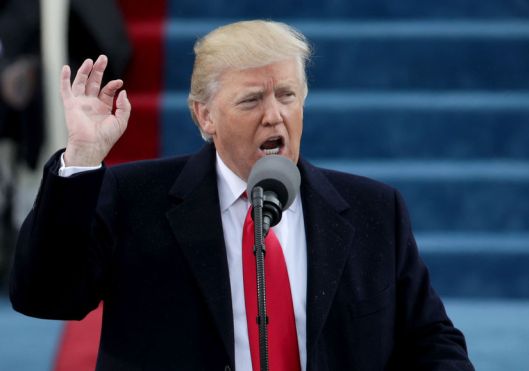
On Friday (Jan 27) President Donald Trump signed an executive order to halt all refugees to the US for 120 days and to indefinitely ban refugees from Syria until “extreme vetting” measures could be put in place. It also limits VISA issuance to individuals from six other predominantly Muslim countries. While humanitarian groups are up in arms, this action needs to be given some serious politico-historical context. I say this as a Muslim immigrant in North America.
Like all incoming presidents, Donald Trump has inherited the mess of previous presidential administrations. Arguably the biggest mess is that of the US led ‘global war on terror,’ which was begun by George W. Bush and continued under the Obama administration, notwithstanding promises to the contrary by Obama.
Despite its supposed fight against terrorism and terrorist groups such as Al Qaeda—the reason this war on terror was purportedly initiated in the first place—it is now known that the US has been supporting certain terrorists groups in countries like Syria, Iraq and Libya. While the US has long claimed to be opposed to Islamic extremism and Islamic terrorism, it has been directly or indirectly fostering it in the Middle East for decades. For everyday people in the US, this might be confusing. Why would a secular country that claims to be opposed to radical Islam and Islamic terrorism actually support these things? Because it serves its political, economic and geopolitical interests, that’s why. I have written on some of these interests elsewhere.
Here I simply wish to state that despite its rhetoric about combating religious extremism and terrorism, previous US administrations have actually promoted terrorism and Islamic extremism in the Middle East while targeting secular Muslim leaders, such as Iraq’s Saddam Hussein, Libya’s Muammar Gaddafi and, presently, Syria’s Bashar al-Assad. The same is true of Lebanon, a secular mixed-religion country that has suffered decades of western meddling and sectarian destabilization tactics. Part of the reason these countries and governments are targeted is that they do not comply with the US’ (and Israel’s) imperial agenda and policies in the region. Rather than supporting moderate, “modern” and secular Middle Eastern states, the US has hitherto declared war on them while allying with the most backward and extremist countries in the region, such as Saudi Arabia.
So What Does Any of This Have to Do With Syrian Refugees?
When the US (and its western and Middle Eastern allies) fund and support Islamic extremists and violent terrorist groups against these secular countries, there are people internally that will opportunistically join forces with them, either as paid mercenaries or for ‘ideological’ reasons or other personal or political reasons. Many join the terrorist groups and kill and plunder alongside them, as has happened in Syria, Iraq and Libya. These are not the type of people any population would want to welcome as refugees and immigrants. Yet, without strict vetting practices, it is possible that such individuals could enter countries like the US and Canada under the pretense of seeking refuge or asylum.
This becomes more likely as terrorist fighters lose ground and are forced to retreat, as they currently are in Syria. With the many terrorist groups in Syria presently being defeated by Syrian and Russian forces, one can imagine that thousands will be frantic and eager to evade capture and escape the country. One way to do this is to leave the country as a refugee and head for the west, especially to sympathetic countries like the US, which were indirectly funding and arming these groups (until very recently) in the first place!
Anyone capable of historical-political analysis, and anyone with a critical and nuanced understanding of the current mess in Syria, and the US’ role in creating this crazy mess, should be capable of understanding this. It is naive to believe that not a single terrorist fighter could be among the thousands of Syrian refugees entering the US. While I do not support a permanent and indiscriminate ban of Syrian refugees, especially for children and women, it may be necessary to implement vetting and screening practices to try to ensure that none of the western-backed terrorist fighters and murderers find their way into the US. This would be a form of blowback that no one would benefit from.
In November 2015 at least 27 states—represented by more than half the nation’s governors—opposed letting Syrian refugees into their states (this was before Obama approved the intake of 10,000 refugees). The reason for this is not simply that they are racist, Islamophobic xenophobes, though this possibly could be said of some of them. The larger reason is because, whether they are willing to publicly admit it or not, these governors understood that part of the blowback—military speak that basically means when our actions abroad come back to bite us in the ass at home—of America’s duplicitous policies in Syria (i.e., supporting and arming terrorist groups while claiming to be against terrorism) could include some of these terrorists fighters/Obama-era proxy mercenaries entering the US later on as refugees.
Of course, the current executive order is far too sweeping and will impact people genuinely effected by US-initiated conflict and destabilization zones abroad, including in the other countries named in the order. The executive order prohibits entry to the United States for nationals from six other Muslim-majority counties — Iran, Iraq, Libya, Somalia, Sudan and Yemen — for at least 90 days, Reuters reported. The US created many of the crises in these countries and continues to turn a blind eye to the plight of the people of Yemen, where the Saudi offensive has resulted in near famine. While the order may be aimed at limiting entry of (US-backed) terrorist fighters and hardcore Islamists, there are people in these countries in actual need of help or refuge. One can only hope that following the initial ban, a screening system will be worked out that helps those that genuinely need it.
In the meantime, one has to remain cognizant of the context that led to all of this. To summarize the main points above, under previous US administrations, murdering lunatics were propped up in the Middle East, including in Syria as part of a US-led effort to oust Bashar al-Assad and completely destabilize that secular Muslim country. Now that this mission has failed, it is not unlikely that some of these murderous US cronies/terrorists could end up in the US as supposed refugees. This is a situation that would benefit no one; and makes a vetting process necessary. And I say this as a Muslim immigrant. [1]
While Trump’s sweeping executive order is likely to create serious upheaval and uncertainly for refugees and migrants already en route, it is borne of an even greater mess and chaos begun by previous administrations and their radicalization and destabilization campaigns in secular countries in the Middle East. In order to understand the current situation, one must have a critical understanding of that larger context.
Notes
[1] As a nonpracticing person that was raised by Muslim parents.

 Today is the two-year mark of this blog site. The very


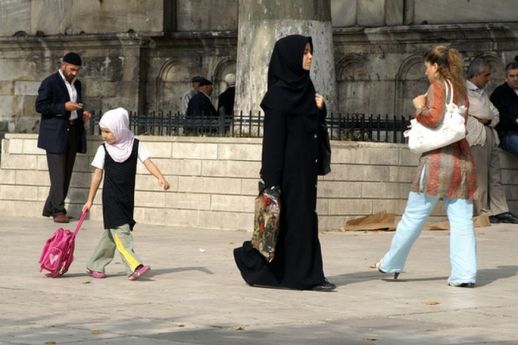 As a “secular Muslim” (I use that term loosely, as more of a cultural description because I do not practice organized religion) I am rather perplexed by the social fallout of the failed military coup in Turkey. While it remains to be proven, Erdogan has officially blamed the coup attempt on the US-backed, self-exiled hard-line Islamist Fethullah Gulen. Gulen is a former political ally of Erdogan and is just as radical—if not more so—an Islamist as Erdogan and his AKP party. If Gulen (with help from the US) was indeed behind the coup attempt, then it is a case of Islamist vs. Islamist and not secular factions within the state trying to take the country back from Erdogan and the Islamists (as many initially thought).
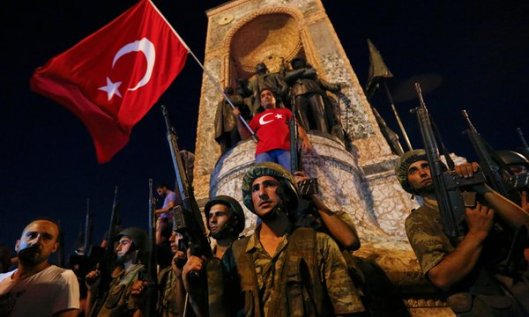 Like many analysts, the attempted coup in Turkey took me very much by surprise.I did not know what to make of it initially and my early elation at the possibility of the Erdogan being ousted was tempered with equal trepidation that this may be a US or NATO backed coup that would see Erdogan replaced—for failing in Syria and for his recent overtures to Russia—by a far more troublesome and more pro-US Islamist, Fethullah Gülen. Then, as the events unfolded, and Erdogan was able to quickly subdue the coup and play it very much to his advantage, I began to suspect that he may have had some hand in it or, more likely, had some foreknowledge of the coup and was able to use it as a pretext to eliminate his enemies—real and imagined—within the state. While we may never know for sure, there is no denying that the coup has hitherto turned out to be a political gift horse for Erdogan and his rabid Islamists.
  Ghada's SoapBox