
In this article I’m breaking a personal vow. It is a vow that I never made publicly but kept internally for a decade or more, probably since around 9/11. Anyone who has followed my writing over the years may have noticed that I rarely comment on American politics. While I have written widely on US foreign policy, I almost never write or talk about US internal or domestic politics.
I have long understood the US administration(s)—with the exception of JFK’s brief tenure—to be a puppet show that is two-parts smoke screen, one-part entertainment and one-part distraction from the neo-con, war mongering, globalist deep state that actually calls the shots. This is so true for me that when other people talk about US politics with deep seriousness—i.e., as if political candidates, parties, democracy, a free press, etc., actually matter or exist in the US—I almost automatically tune out. While all politics is theatre to a certain extent, the US is exceptional in this regard. And the notion that there is much that is real, authentic or autonomous in US government and politics is so foreign to me that I cannot connect to it, or respond to it, with much seriousness.
With all that said, today I break my silence, in order to comment briefly on the 2016 US presidential election in the aftermath of Trump’s victory. At the beginning of this presidential campaign, I thought Donald Trump’s candidacy might be a publicity stunt; like a bombastic prime time reality show. But I was aware that the hard-core neocon, war mongering Hilary Clinton was the real danger, in terms of foreign policy and international politics. Her policies and past crimes are completely in-line with the current US-imperial agenda of endless war and military might, and this makes her far far more dangerous than Trump. It also made her far more likely to win the election, I presumed. Continue reading
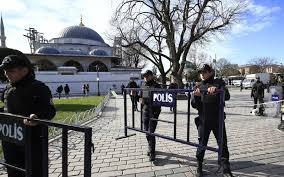
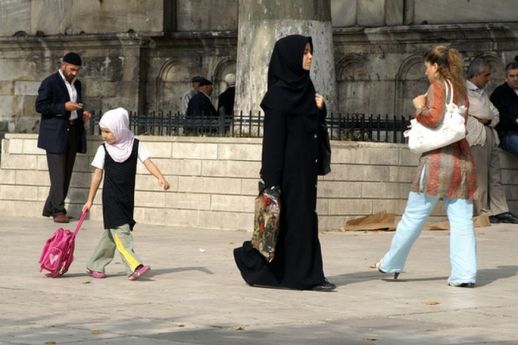 As a “secular Muslim” (I use that term loosely, as more of a cultural description because I do not practice organized religion) I am rather perplexed by the social fallout of the failed military coup in Turkey. While it remains to be proven, Erdogan has officially blamed the coup attempt on the US-backed, self-exiled hard-line Islamist Fethullah Gulen. Gulen is a former political ally of Erdogan and is just as radical—if not more so—an Islamist as Erdogan and his AKP party. If Gulen (with help from the US) was indeed behind the coup attempt, then it is a case of Islamist vs. Islamist and not secular factions within the state trying to take the country back from Erdogan and the Islamists (as many initially thought).
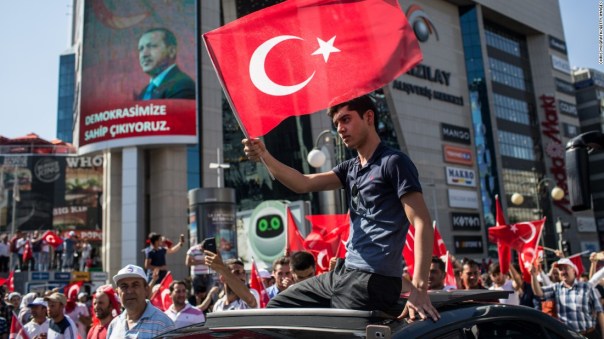
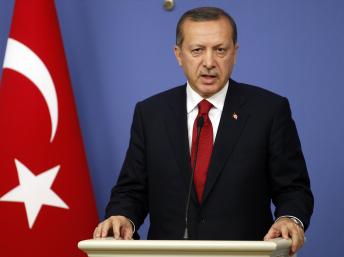
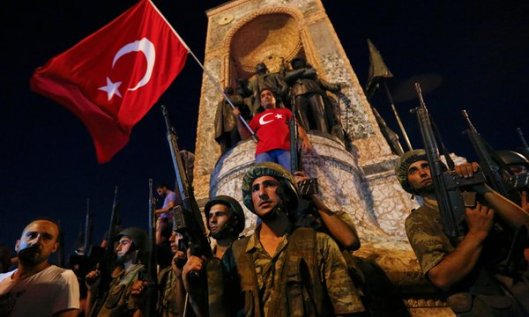 Like many analysts, the attempted coup in Turkey took me very much by surprise.I did not know what to make of it initially and my early elation at the possibility of the Erdogan being ousted was tempered with equal trepidation that this may be a US or NATO backed coup that would see Erdogan replaced—for failing in Syria and for his recent overtures to Russia—by a far more troublesome and more pro-US Islamist, Fethullah Gülen. Then, as the events unfolded, and Erdogan was able to quickly subdue the coup and play it very much to his advantage, I began to suspect that he may have had some hand in it or, more likely, had some foreknowledge of the coup and was able to use it as a pretext to eliminate his enemies—real and imagined—within the state. While we may never know for sure, there is no denying that the coup has hitherto turned out to be a political gift horse for Erdogan and his rabid Islamists.
 Ghada's SoapBox